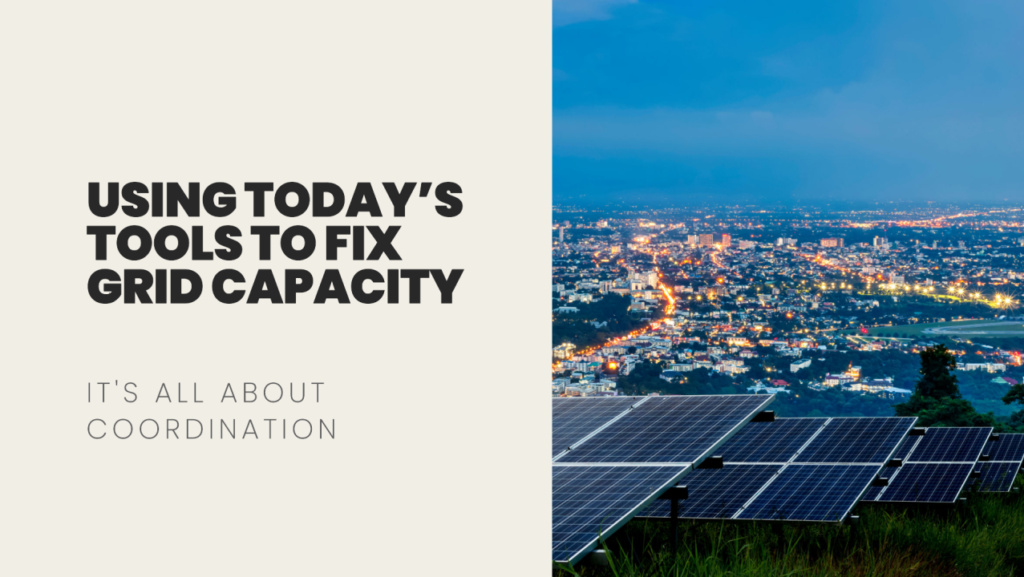
Utilities consistently grapple with maintaining a reliable and efficient grid in the face of rapidly increasing electricity demands. Traditionally, most have leaned on custom programs to impact demand and manage capacity issues. While effective in specific scenarios, these programs often address symptoms rather than the root causes. Plus the scalability of custom programs is usually limited, and they often necessitate frequent adjustments, addressing immediate challenges rather than the deeper, underlying issues.
But the biggest mistake utilities make is that they tend to treat them as stand alone solutions and often do not effectively coordinate or integrate them with one another.
Utilities generally understand what needs to be done at a macro level. And it’s not about having the right tools. The real challenge is that they can’t coordinate all of the tools or dynamically target them based on which one is relevant for each of their customers.
The most effective solution varies by customer. Applying a program across your entire customer base is not only inefficient, but ineffective. But the alternative means having the ability to both disaggregate and understand individual customer behaviour, and the capabilities to implement micro targeted programs based on home level demand and needs.
Advanced Analytics and Machine Learning
One way to do this is to leverage advanced analytics and machine learning to analyze extensive data sets, predict demand patterns, and optimize grid operations. Data-driven decision-making can allow you to uncover hidden problems and proactively address capacity issues to enhance efficiency and reliability.
Demand-Side Management Platforms
Utilities employ various customer programs to actively engage customers in managing and reducing their energy consumption. These programs aim to empower consumers with information, incentives, and tools to make more informed choices about their energy usage.
Effective demand management means optimizing at both the grid level and the individual building levels. While each of these can be managed independently, the real power comes when they work in concert with one another with both reacting to grid signals in real-time to optimize.
Examples include:
- Demand Response Programs where Customers voluntarily reduce their energy usage during periods of high demand in exchange for incentives or bill credits.
- Smart Thermostats and Home Energy Management Systems that enable customers to remotely control and optimize their heating, ventilation, and air conditioning (HVAC) systems.
- Renewable Energy Programs that allow customers to invest in or purchase renewable energy, such as solar or wind power. This could include community solar programs or green energy subscriptions.
- online platforms or mobile apps that provide customers with real-time information about their energy usage, allowing them to track consumption patterns and identify areas for improvement.
- Electric Vehicle (EV) Charging Programs to support the adoption of electric vehicles and manage the increased demand on the grid.
- Other behavioral Programs to encourage energy-saving behaviors. This may include personalized feedback, social comparisons, and gamification elements.
Coordinating Tools for Action
While each one can be implemented individually, they work best as part of a comprehensive approach that complements whatever programs you have in place today.
Coordinating a diverse set of tools, each contributing unique insights and actions, holds the key to addressing the complex challenges faced by today’s utilities. By harmonizing these tools, utilities can unlock a new level of responsiveness, resilience, and sustainability.